Firewood can be a sustainable heat source. Here’s how.
Heat derived from wood that is harvested intentionally, burned close to the harvest site, burned in a modern wood stove and properly cured, is close to carbon neutral. Below, Megan Monson talks about her relationship to the wood that heats her home:
Carbon Cycles
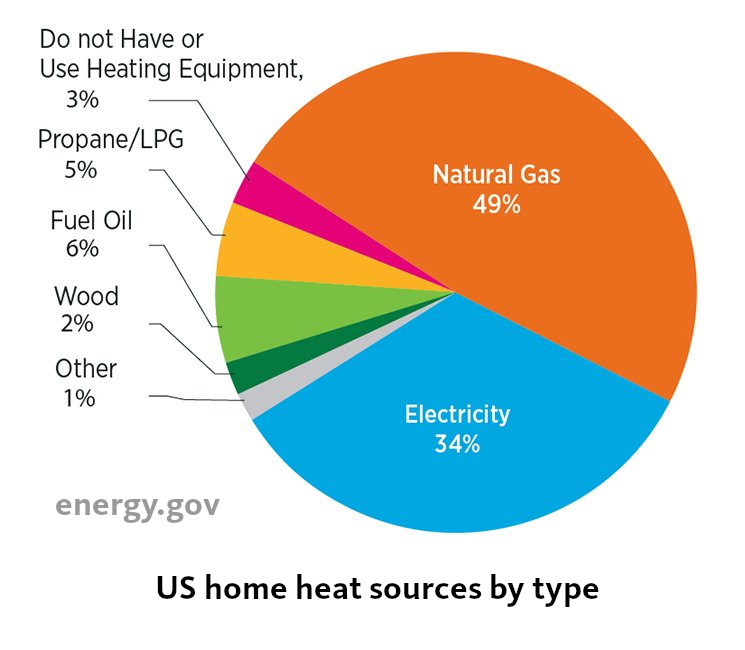
Most homes in America are heated by electricity or natural gas. These energy sources are fossil fuels, which means sources of sequestered carbon — carbon that is deep in the Earth’s crust — are being dug up. When those sources are used as fuel, stored carbon is released into the atmosphere as carbon dioxide.
The sudden rise of greenhouse gasses such as carbon dioxide is rushing our planet into a climate emergency. While the percentage of electricity generated from renewable sources continues to grow, Americans are still reliant on sequestered carbon for home heating.
But wood heat is different. The carbon cycle of wood happens on the surface of Earth, and on a time scale much closer to a human lifespan.
As trees grow, they capture atmospheric carbon dioxide and store it in woody tissue. When trees die, nearly all of the carbon stored in the tissue is released back into the atmosphere. A small percentage is sequestered into the surrounding soil.

More trees on the surface of the Earth is definitely a good thing for climate change, though it’s a little more complicated than, “more trees = less atmospheric carbon dioxide.” A meaningful reduction in greenhouse gasses by storing carbon in the tissue of more trees is a reality that could happen in a human generation or less — and that reality can be compatible with the use of wood for home heating.
How can firewood be sustainable? Four circumstances make it possible
1. It has to be harvested with intention
Deforestation for wood as a heat source is a problem globally. But in most of North America, keeping firewood harvesting rates below regeneration rates in a forest is reasonable to do. Dead trees offer the best source of firewood because as they decompose, their stored carbon is being released into the atmosphere anyway. In managed forests, trees are thinned periodically to promote growth, which is another potential source of firewood. Managing a forest to produce firewood can improve the health of the forest.
Most forest land has the potential to produce a large quantity of quality firewood without harvesting large, healthy trees. Sustainable firewood potential per acre of forest varies by climate and soil, but as little as an acre of forest can supply a season’s worth of firewood. Hardwood species common in the eastern United States will burn longer and slower than the pine and fir species common in the western United States, but take longer to grow.
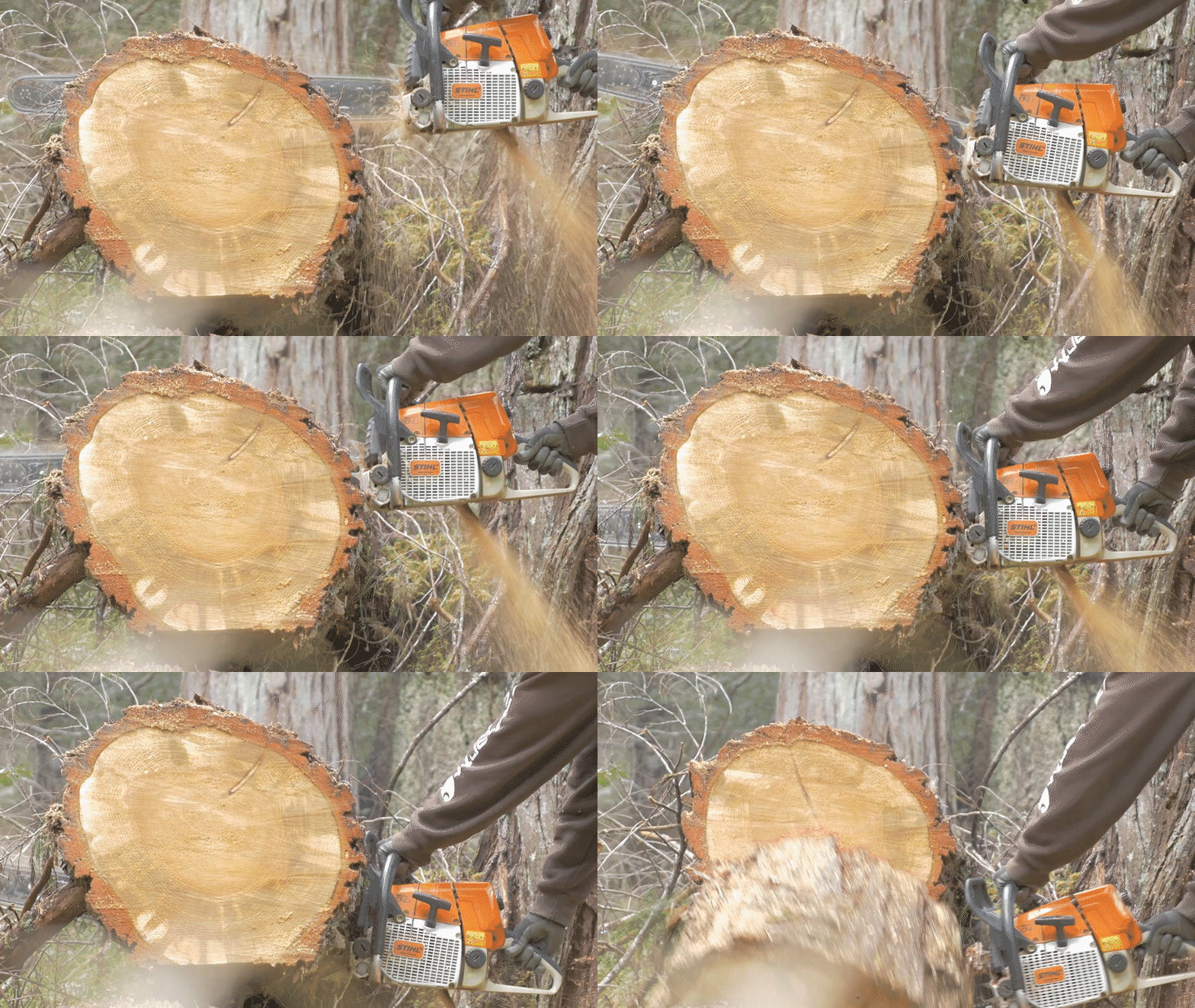
The most sustainable firewood comes from dead trees, such as this cedar knocked over in a storm. Many national and state forests issue firewood cutting permits for dead and down trees in public forests.
2. It can’t travel too far
All sources of heat have indirect carbon costs, mostly associated with transportation. Coal, natural gas and heating oil all require several kinds of transportation before they heat a home, and any transportation involves consuming fossil fuels. The same is true for wood, but it can be dramatically lower.
For wood heat to be sustainable, it shouldn’t be transported more than 10 miles. Besides the fossil fuels involved in transporting wood, firewood has the potential to carry pests into new environments. And even if you swing your own axe, most firewood harvesting will still require using a chainsaw. Still, the indirect carbon cost of harvesting firewood close to where you burn it is a lot less than other heat sources.
3. It has to be burned in a modern stove
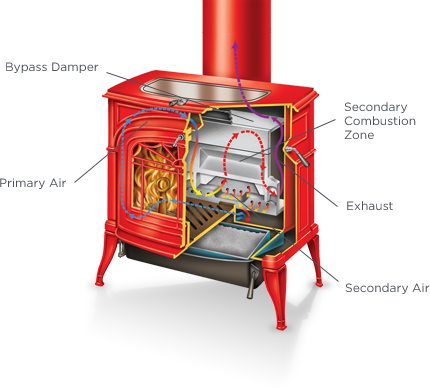
Modern EPA certified wood stoves use secondary combustion to burn the gasses released by burning wood. They are dramatically cleaner and more efficient than stoves produced decades ago.
Secondary combustion produces rolling flames, more heat and less smoke.
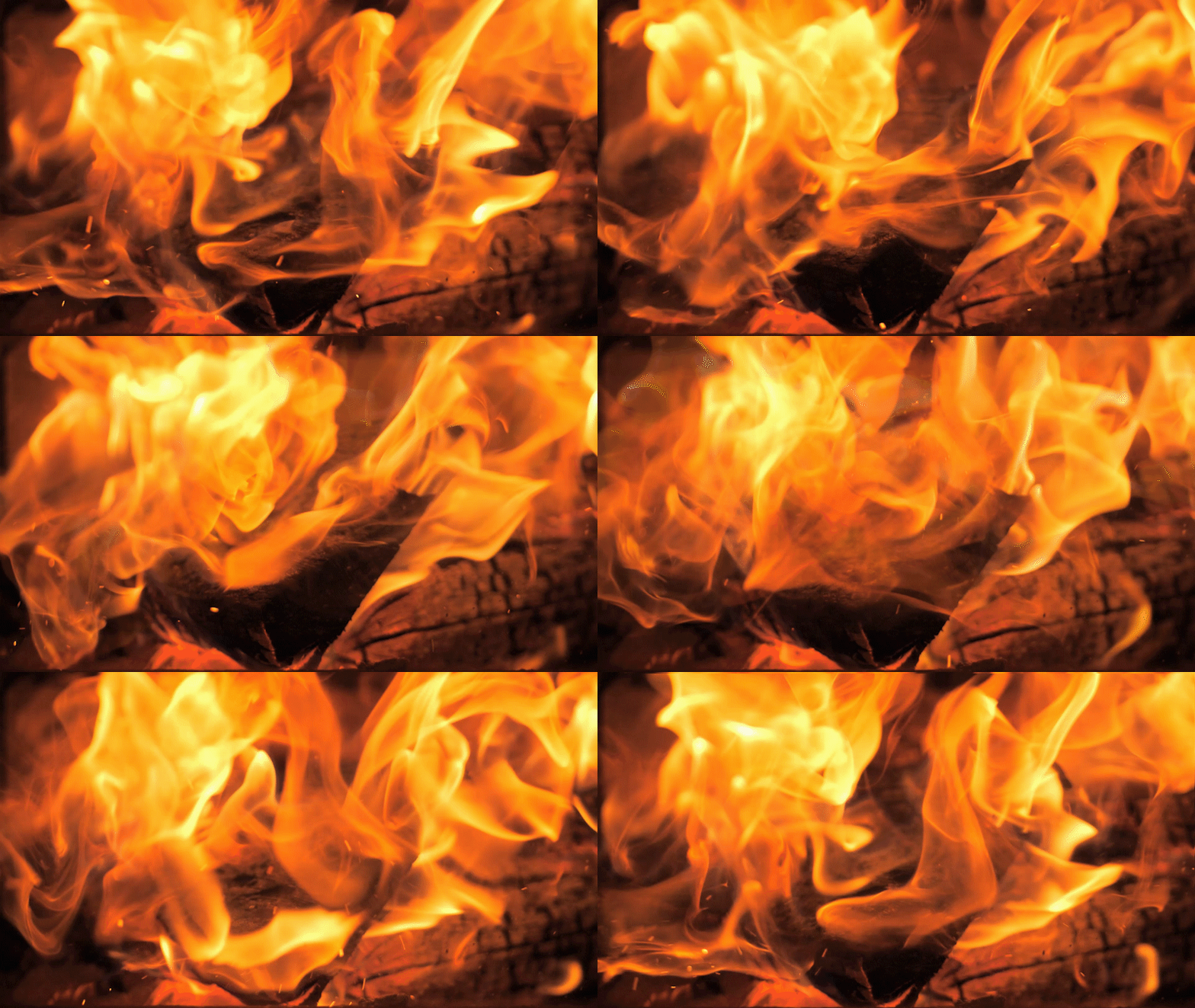
When wood burns, it releases particulate matter into the atmosphere as well as stored carbon dioxide. This is a problem that plagues many developing nations where people rely on wood for heat and cooking. Fine particulate matter, called PM2, is bad for human health and lingers in the air.
But modern stoves release a lot less particulate matter than open flames:
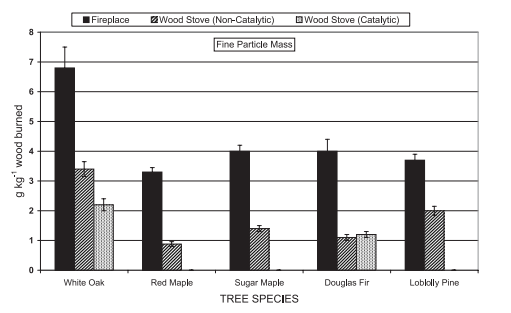
Wood burned in a modern stove releases up to four times less particulate matter than an open flame with species of wood commonly used as firewood. In areas that aren’t densely populated, this level of particulate emissions won’t harm humans and won’t create the smoky haze usually associated with wood stoves. A modern wood stove only smokes when the fire is first started.
4. It has to be properly cured
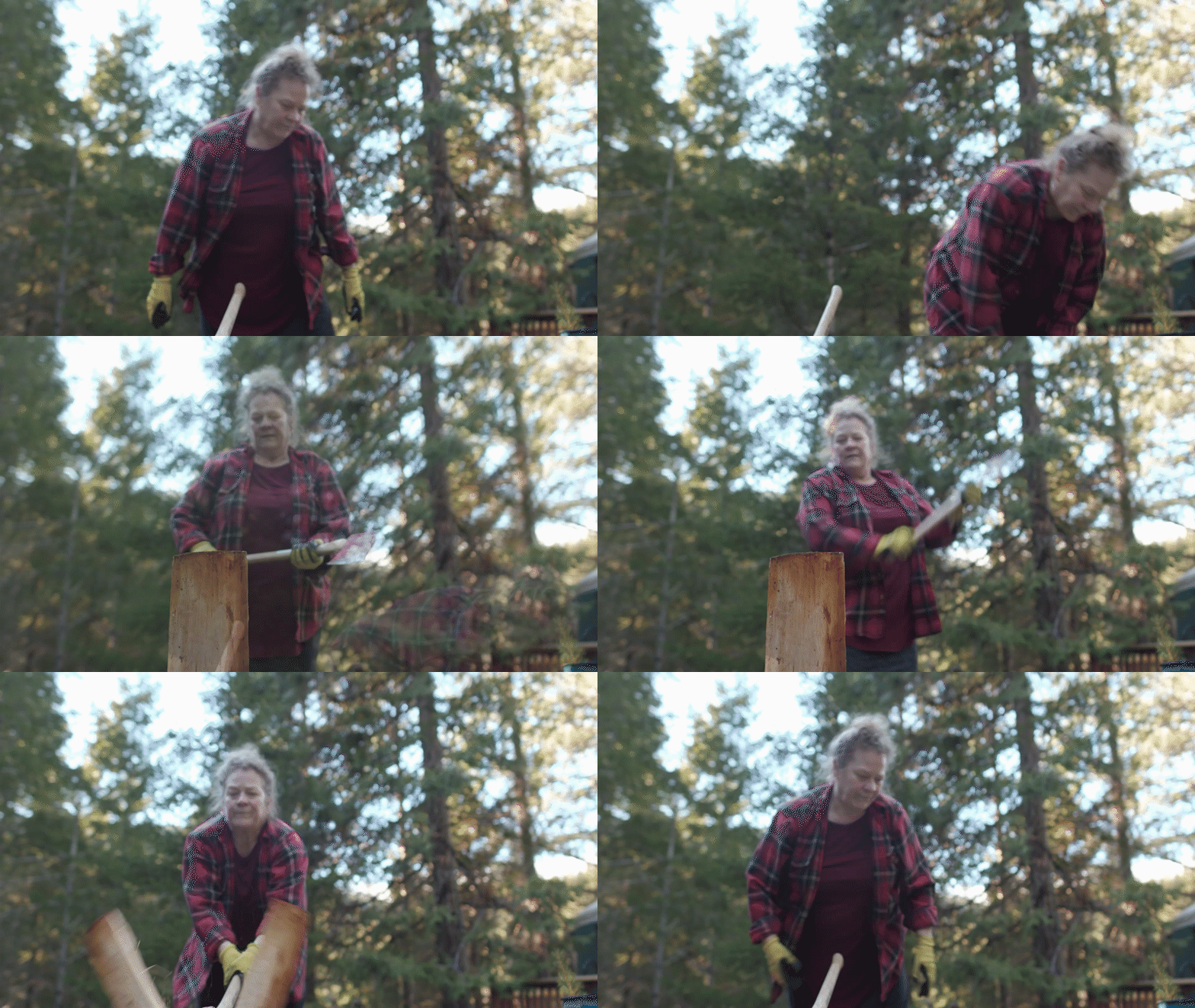
Properly cured Douglas Fir splits easily and burns cleanly.
Fresh cut wood, sometimes called green wood, has a high moisture content. When wood is wet, it doesn’t burn as hot and it emits much more smoke and particulate matter into the atmosphere.
Whether you stack firewood with the bark up or down, or in rows or circles — it needs to be stacked, covered and cured. The 20% moisture content ideal for firewood can take a year for softwoods to cure to, and twice that for hardwoods, but it varies by context.
Wood heat done right, is work. But it’s work that makes people part of the cycle.
It’s not possible for the vast majority of people on the planet to heat their homes with wood, but for many people in rural, wooded areas, it is. Cutting, stacking and curing firewood takes time, physical labor and planning. But the process also puts people into forests, and makes humans part of the carbon cycle of trees. And trees are part of the solution to the climate emergency our world is facing.